Water Filtration Systems

Residential & Commercial Plumbing Professioinals
Free Estimates • 24/7 Service Available
Call Today
863-334-3242
Custom Water Filtration Systems
When you need a high-quality water filtration system, Water Leak & Drain Busters provides professional water testing, system design, and expert installation that delivers pure, clean water to every faucet. The water that enters your home from a municipal supply or private well carries more than just H2O. Depending on your source, it may contain chlorine and chloramines added for disinfection, dissolved minerals that create hard water, iron that stains fixtures and laundry, sediment that clogs aerators and appliance inlets, and potentially harmful contaminants like lead, nitrates, or bacteria. You experience these impurities every day. Hard water leaves spots on glasses and shower doors, makes soap difficult to lather, and builds up scale inside your water heater, dishwasher, and pipes. Chlorine gives your water a swimming pool smell and dries your skin and hair. Iron creates rusty stains in sinks, tubs, and toilets. Sediment reduces water pressure and shortens the life of appliances. A properly designed water filtration system addresses these issues at the point where water enters your home, delivering treated water to every tap, shower, and appliance. For water heater protection, our Water Heater Repair services can assess the impact of hard water on your existing unit. For comprehensive plumbing support, our Plumbing Services team handles all your plumbing needs.
Our Water Filtration System Process
Water Testing
The first and most important step in designing a water filtration system is understanding exactly what’s in your water. We don’t guess—we test. Our comprehensive water analysis measures hardness levels, iron content, pH, total dissolved solids, chlorine or chloramine levels, and can include testing for specific contaminants of concern such as lead, nitrates, bacteria, or sulfur. For homes on well water, we recommend testing for coliform bacteria and nitrates, which are common concerns in private wells and can change over time. For homes on municipal water, we review the annual water quality report from your utility and test for the parameters that municipal treatment doesn’t fully address, such as hardness and chlorine residual. The test results tell us exactly what treatment is needed and prevent the common mistake of installing equipment that doesn’t address your actual water quality issues. Based on the test results, we design a system tailored to your specific water chemistry and your household’s water usage patterns. We discuss your priorities—whether it’s eliminating hard water spots, removing chlorine taste and odor, addressing health-related contaminants, or all of the above—and recommend the equipment that achieves your goals.
Installation and Ongoing Support
Once the system is designed, our licensed plumbers handle the complete installation. We install the filtration equipment at your main water service entry, connecting it to your existing plumbing with proper bypass valves that allow you to isolate the system for maintenance without shutting off water to your home. All connections are made to code, with proper drainage for backwash cycles and appropriate electrical connections where needed. We test the installed system to verify it’s treating your water to the specified levels, and we walk you through system operation, maintenance requirements, and any ongoing monitoring needed. For homes on well water, we can assess the condition of your well supply line during installation. For new construction, our Plumbing Services team can integrate water filtration from the start. For kitchen upgrades, our Plumbing Fixture Installation service can install point-of-use filtration at specific fixtures.
Types of Water Filtration Systems
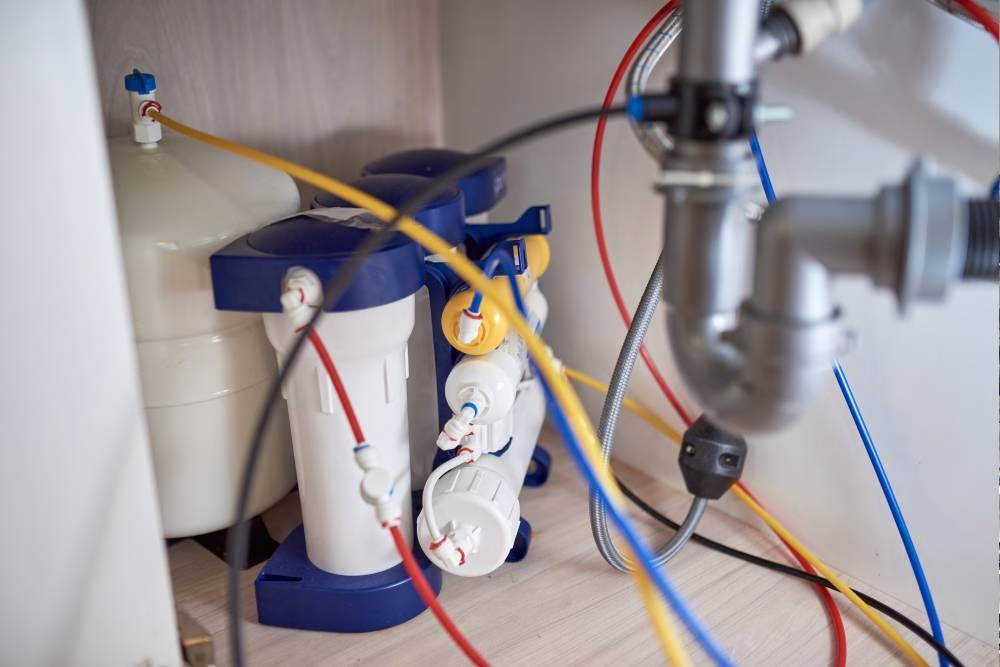
Different water problems require different treatment technologies, and we design systems that combine the appropriate methods for your specific situation. Whole-house water softeners address hard water by removing the calcium and magnesium ions that cause scale buildup, soap scum, and spotting. Using an ion exchange process, the softener replaces these hardness minerals with sodium or potassium ions, delivering soft water throughout your home. The benefits include longer appliance life, reduced soap and detergent usage, spot-free dishes and glassware, softer skin and hair, and protection for your water heater and plumbing from scale accumulation. Whole-house carbon filtration removes chlorine, chloramines, and organic compounds that affect taste and odor. Activated carbon media chemically bonds with these contaminants, removing them from your water before it reaches your taps. Carbon filtration also removes many pesticides, herbicides, and industrial chemicals. Iron filtration addresses the dissolved iron that causes rusty stains on fixtures and laundry. Specialized iron filter media oxidizes dissolved iron into solid particles that are then filtered out. For water with both hardness and iron, combination softener-filters provide comprehensive treatment. Reverse osmosis systems provide the highest level of purification for drinking water. Installed under the kitchen sink with a dedicated faucet, reverse osmosis forces water through a semipermeable membrane that removes up to 99% of dissolved solids, including lead, arsenic, fluoride, nitrates, and sodium. Ultraviolet disinfection systems use UV light to neutralize bacteria, viruses, and other microorganisms without chemicals. UV systems are often installed on well water supplies as a final barrier against biological contamination. For commercial filtration needs, our Commercial Plumber service handles large-scale water treatment systems. For restaurants requiring high-quality water, our Restaurant Plumbing service installs commercial-grade filtration.
The Cost of Untreated Water
What Hard Water and Contaminants Are Really Costing You
The financial impact of untreated water extends far beyond the inconvenience of spotted dishes and dry skin. Hard water scale buildup inside your water heater acts as an insulator between the heating element or burner and the water, forcing the unit to work harder and use more energy. Studies have shown that just a quarter-inch of scale can increase water heating costs by up to forty percent. Scale also shortens water heater life—the leading cause of premature water heater failure is sediment and scale accumulation. Our Water Heater Repair service sees this damage regularly. Every appliance that uses water suffers from hard water. Dishwashers and washing machines develop scale on heating elements and internal components, reducing efficiency and requiring more frequent repair or replacement. Faucets and showerheads become clogged with mineral deposits that restrict flow. Pipes narrow from internal scale, reducing water pressure and eventually requiring replacement. The cost of soap, shampoo, and laundry detergent increases with hard water because hardness minerals interfere with lathering, requiring more product to achieve the same cleaning results. Fabrics washed in hard water wear out faster because mineral deposits make them stiff and abrasive. The cumulative annual cost of untreated hard water for an average household can exceed a thousand dollars in energy, cleaning products, appliance wear, and plumbing repairs. A water softener typically pays for itself within a few years through these savings alone. For drain maintenance related to scale buildup, our Drain Cleaning and Hydro Jetting services remove existing scale from pipes. For leak detection related to corrosion, our Leak Detection service finds hidden pipe damage.
Why Water Leak & Drain Busters Is the Right Choice for Water Filtration Systems
Water Testing First, Equipment Second. We don’t sell equipment without first understanding your water. Our comprehensive water testing identifies exactly what’s in your water, so the system we design addresses your actual problems rather than applying a generic solution. This testing-driven approach prevents the common mistake of buying equipment that doesn’t solve your specific water quality issues.
Plumbing Expertise Meets Water Treatment Knowledge. Water filtration is at the intersection of plumbing and water chemistry. Our licensed plumbers understand both. We size equipment correctly for your home’s flow rate requirements, install it with proper bypass valving and drainage, and ensure the installation meets plumbing code. We also understand how water chemistry affects your entire plumbing system, from pipe corrosion to water heater efficiency. For related services, our Plumbing Services team handles all plumbing needs. Our Emergency Plumber service provides 24/7 response. Our Backflow Testing service ensures compliance. Our Sewer Line Repair , Pipe Lining , and Sewer Camera Inspection services address underground infrastructure. Our Property Management Plumbing service coordinates filtration across multiple properties.
Schedule Your Water Filtration System Consultation Today
You shouldn’t have to wonder what’s in your water every time you fill a glass or step into the shower. Whether you’re dealing with hard water spots, chlorine taste, iron stains, or concerns about contaminants, Water Leak & Drain Busters has the testing expertise, system design knowledge, and professional installation skills to deliver the clean, pure water your family deserves. We also offer complete Plumbing Services, Emergency Plumber, Commercial Plumber, Drain Cleaning, Water Heater Repair, Leak Detection, Sewer Line Repair, Sewer Camera Inspection, Hydro Jetting, Pipe Lining, Plumbing Fixture Installation, Backflow Testing, Property Management Plumbing, and Restaurant Plumbing —making us your complete plumbing resource. Call us today or book online. We’re proud to be the trusted choice for water filtration systems.
Frequently Asked Questions About Water Filtration Systems
How do I know what type of water filtration system I need?
The only way to know is through water testing. Different water problems require different treatment technologies, and guessing leads to buying equipment that may not solve your actual issues. Our comprehensive water analysis identifies hardness, iron, chlorine, pH, total dissolved solids, and other parameters, allowing us to design a system specific to your water.
What's the difference between a water softener and a water filter?
A water softener specifically removes hardness minerals—calcium and magnesium—through ion exchange. A water filter removes other contaminants such as chlorine, sediment, iron, or organic compounds depending on the filter media. Many homes benefit from a combination system that addresses both hardness and other water quality concerns.
How long does a water filtration system last?
With proper maintenance, water softeners and whole-house filters typically last fifteen to twenty years or more. Reverse osmosis membranes typically last three to five years before replacement. Pre-filters and post-filters in RO systems should be changed annually. We provide maintenance schedules specific to your equipment.
Will a water softener make my water feel slippery?
Soft water can feel different if you’re accustomed to hard water. The “slippery” feeling is actually what clean skin feels like when not coated with soap scum and mineral residue. Most people adjust quickly and come to prefer the feel of soft water, along with the benefits of softer skin and hair.
Can I drink softened water?
Yes, water softened through ion exchange is safe to drink. The process adds a small amount of sodium or potassium to the water. For those on sodium-restricted diets, we can install a reverse osmosis system for drinking water or use potassium chloride instead of sodium chloride in the softener.
Do water softeners waste a lot of water?
Modern high-efficiency water softeners use significantly less water and salt than older models. A typical household softener uses about as much water per regeneration cycle as a load of laundry, and regenerates only when needed based on actual water usage.
How much does a whole-house water filtration system cost?
Cost varies based on the type of treatment needed, system size, and installation complexity. A basic water softener installation costs less than a comprehensive system with softening, carbon filtration, iron removal, and reverse osmosis. We provide detailed, transparent pricing after water testing and system design, with no hidden fees.
Do you service and repair existing water filtration systems?
Yes. We service and repair all types and brands of water treatment equipment, including systems we didn’t install. Common repairs include replacing failed control valves, resin beds, filter media, and RO membranes. Our Plumbing Services team can address any plumbing issues related to your filtration system.