Pipe Lining

Residential & Commercial Plumbing Professioinals
Free Estimates • 24/7 Service Available
Call Today
863-334-3242
Advanced Pipe Lining
When you need a lasting pipe lining solution, Water Leak & Drain Busters brings trenchless technology that rehabilitates your damaged sewer and drain lines without destroying your landscaping, driveway, or floors. Traditional pipe repair means excavation. A backhoe tears up your yard, your driveway is cut open, or your basement floor is jackhammered to reach the damaged pipe. The repair itself might take hours, but the restoration—repaving, replanting, rebuilding—takes weeks and costs thousands beyond the plumbing work. Pipe lining offers a fundamentally different approach. Instead of digging out the old pipe, we create a new pipe inside it. An epoxy-saturated liner is inserted into the damaged pipe through a single access point. The liner is inflated against the pipe walls, and when the epoxy cures, it forms a hard, seamless, jointless new pipe within the old one. The new pipe is rated to last fifty years or more. It seals cracks, bridges small gaps, eliminates root intrusion at joints, and restores full flow capacity—all without excavation. For visual diagnosis before lining, our Sewer Camera Inspection service provides detailed views of your pipe’s interior condition. For traditional repair when lining isn’t appropriate, our Sewer Line Repair services provide complete solutions.
How Pipe Lining Works
The Trenchless Technology
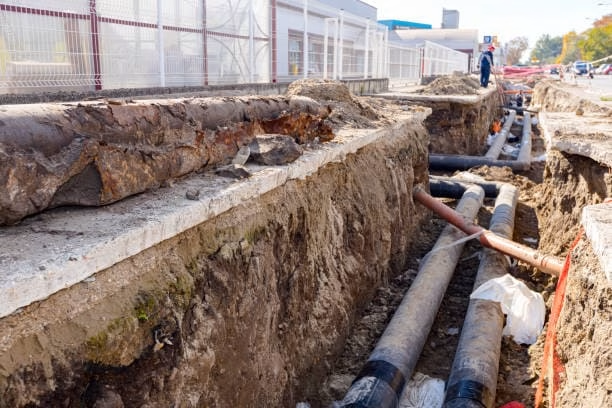
Pipe lining—technically called Cured-In-Place Pipe or CIPP—has been used for decades to rehabilitate underground infrastructure without excavation. The process begins with a thorough cleaning of the existing pipe. Our Hydro Jetting service uses high-pressure water to remove scale, grease, roots, and debris from the pipe walls. A clean surface is essential for proper liner adhesion. After cleaning, we conduct a final Sewer Camera Inspection to confirm the pipe is ready for lining and to take precise measurements of the section to be lined. The liner itself is a flexible tube made of felt or fiberglass, saturated with a two-part epoxy resin. The liner is manufactured to the exact diameter and length of your pipe section. The epoxy is mixed on site and the liner is saturated under controlled conditions to ensure even distribution. The saturated liner is inserted into the pipe through an existing access point—typically a cleanout or a small excavation at one end. Compressed air or water pressure inverts the liner, pushing it through the pipe and pressing it firmly against the pipe walls. The liner conforms to every contour of the existing pipe, filling cracks, spanning joints, and creating a smooth interior surface. The epoxy cures at ambient temperature or is accelerated with hot water or steam, depending on the specific system used. Curing typically takes two to four hours. Once cured, the ends of the liner are trimmed, lateral connections are reopened with a robotic cutter, and a final camera inspection verifies the installation. The result is a new, seamless, corrosion-resistant pipe with a fifty-year design life.
What Pipe Lining Can and Cannot Fix
Pipe lining is an excellent solution for many common pipe problems, but it’s not appropriate for every situation. Lining works well for cracked pipes, where the liner bridges the crack and prevents further damage. It seals leaking joints, eliminating groundwater infiltration and root intrusion at every joint along the lined section. It fills small holes and gaps, restoring structural integrity to pipes with minor damage. It addresses corrosion in cast iron pipes, creating a barrier between the corrosive wastewater and the metal pipe wall. Pipe lining cannot fix a completely collapsed pipe—if the existing pipe has lost its structural shape, there’s no form for the liner to take. It cannot correct a belly or back-pitched section where the pipe has settled and no longer drains properly—lining the pipe won’t change its slope. It cannot increase the pipe diameter, and the liner does reduce the interior diameter slightly, though the improved flow characteristics of the smooth new surface typically compensate. For situations where lining isn’t appropriate, our Sewer Line Repair services provide traditional and alternative trenchless options. For comprehensive plumbing assessment, our Plumbing Services team can evaluate your entire system.
The Advantages of Pipe Lining Over Traditional Excavation
The benefits of trenchless pipe lining extend far beyond avoiding a hole in your yard. Cost savings are significant when restoration is considered. Traditional excavation doesn’t just involve the plumbing repair—it requires replacing landscaping, repaving driveways, rebuilding patios, and restoring whatever was demolished to access the pipe. These restoration costs often exceed the plumbing work itself. Pipe lining eliminates virtually all restoration costs. Time savings are substantial. A traditional sewer line replacement can take a week or more when excavation, repair, backfilling, and restoration are included. Pipe lining is typically completed in a single day. Your family or business isn’t displaced for an extended period. Property preservation is perhaps the most immediate benefit. Mature trees, established landscaping, custom hardscaping, and finished basements remain untouched. The improvements you’ve made to your property aren’t sacrificed to access a buried pipe. Pipe quality is actually superior in some respects. The new epoxy pipe is seamless—there are no joints where roots can enter or leaks can develop. The interior surface is smoother than any traditional pipe material, improving flow characteristics. The epoxy is resistant to the chemicals found in household wastewater and won’t corrode like metal pipes. For commercial properties, our Commercial Plumber service uses pipe lining to minimize business disruption. For property managers, our Property Management Plumbing service coordinates lining projects across multiple properties.
The Pipe Lining Process Step by Step
What to Expect When We Line Your Pipes
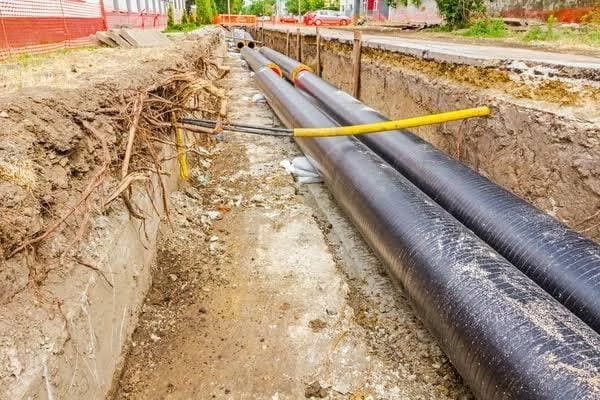
The pipe lining process follows a predictable sequence that typically spans one to two days. On the first day, we perform the preparatory work. We locate and access the pipe section to be lined. We clean the pipe thoroughly using Hydro Jetting to remove all debris, scale, and buildup. We conduct a detailed Sewer Camera Inspection to measure the pipe and confirm its condition. We mix the epoxy and saturate the liner. We insert the liner, inflate it, and begin the curing process. During curing, you cannot use water in the affected drains—typically four to six hours. We coordinate this with you to minimize inconvenience. Once cured, we trim the liner ends, reopen lateral connections, and perform a final camera inspection. We review the results with you and provide documentation of the completed installation. For restaurants and food service operations, our Restaurant Plumbing service coordinates pipe lining during closed hours to eliminate business disruption. For emergency situations, our Emergency Plumber service provides 24/7 response, though pipe lining is typically a planned procedure rather than an emergency repair. For ongoing maintenance after lining, our Drain Cleaning services keep your new pipe flowing freely. For water quality, our Water Filtration Systems service provides clean water solutions. For compliance, our Backflow Testing service ensures your property meets local requirements. For fixture installation, our Plumbing Fixture Installation service handles upgrades. For water heater concerns, our Water Heater Repair service ensures reliable hot water.
Why Water Leak & Drain Busters Is the Right Choice for Pipe Lining
Proven Trenchless Technology. Pipe lining is not an experimental technique—it has been used for decades in municipal and residential applications worldwide. Our technicians are trained and certified in CIPP installation. We use commercial-grade epoxy systems with documented fifty-year performance ratings. The result is a permanent repair, not a temporary patch.
Minimal Disruption, Maximum Results. The most visible benefit of pipe lining is what doesn’t happen—no backhoe in your yard, no driveway torn up, no landscaping destroyed, no basement floor jackhammered. Most residential pipe lining projects are completed in a single day with a single access point. Your property remains intact while your pipes are restored to better-than-new condition. For comprehensive plumbing care, our Plumbing Services team handles every aspect of your plumbing system.
Schedule Your Pipe Lining Consultation Today
Don’t let the fear of a destroyed yard keep you from fixing your sewer line. Whether you’ve been told you need a dig-up replacement or you’re looking for a better way to address recurring drain problems, Water Leak & Drain Busters has the trenchless technology and certified expertise to restore your pipes without destroying your property. We also offer complete Plumbing Services, Emergency Plumber, Commercial Plumber, Drain Cleaning, Water Heater Repair, Leak Detection, Sewer Line Repair, Sewer Camera Inspection, Hydro Jetting, Plumbing Fixture Installation, Backflow Testing, Water Filtration Systems, Property Management Plumbing, and Restaurant Plumbing —making us your complete plumbing resource. Call us today or book online. We’re proud to be the trusted choice for pipe lining.
Frequently Asked Questions About Pipe Lining
How long does a pipe lining installation last?
Epoxy pipe lining is rated for a service life of fifty years or more. Municipal water and sewer systems have used CIPP technology for decades with excellent long-term performance. The epoxy material is resistant to corrosion, chemicals, and root penetration. When properly installed, a lined pipe will likely outlast the rest of your plumbing system.
Does pipe lining reduce the diameter of my pipes?
The liner adds approximately one-quarter inch to the interior wall, slightly reducing the pipe diameter. However, the new epoxy surface is significantly smoother than old cast iron, clay, or concrete pipe, which improves flow characteristics. In most cases, the flow rate through a lined pipe equals or exceeds the original pipe’s performance, especially if the old pipe had scale or corrosion.
Can all pipes be lined?
Most pipes from two inches to twelve inches in diameter can be lined. The existing pipe must have enough structural integrity to serve as a form for the liner—completely collapsed pipes cannot be lined. Pipes with sharp bends greater than ninety degrees, severe offsets at joints, or extensive missing sections may not be suitable. Our Sewer Camera Inspection determines whether your pipe is a candidate for lining.
How long does the pipe lining process take?
Most residential pipe lining projects are completed in a single day. The actual installation of the liner takes a few hours. Curing time varies based on the epoxy system and ambient temperature—typically two to four hours. During curing, you cannot use water in the affected drains. We’ll coordinate timing to minimize inconvenience.
Is pipe lining more expensive than traditional pipe replacement?
The pipe lining procedure itself is typically comparable in cost to traditional excavation. Where lining provides significant savings is in restoration—you avoid the cost of replacing landscaping, repaving driveways, repairing patios, and restoring whatever was demolished to access the pipe. When restoration costs are included, pipe lining is often substantially less expensive.
Will pipe lining fix the root intrusion in my sewer line?
Yes. Tree roots enter through cracks and joints in the pipe. Pipe lining creates a seamless, jointless new pipe that seals every crack and every joint. Existing roots are removed during the pre-lining cleaning process, and the new pipe has no entry points for future root growth.
How do you prepare my pipes for lining?
Thorough cleaning is essential. We use Hydro Jetting to remove scale, grease, roots, and debris from the pipe walls. The pipe must be completely clean for the epoxy liner to bond properly. After cleaning, we conduct a final camera inspection to confirm readiness.
What areas of my plumbing can be lined?
Sewer main lines, branch drain lines, vent stacks, and most gravity-flow pipes can be lined. The technology is not suitable for pressurized water supply lines. Our Sewer Camera Inspection can assess any drain line to determine if lining is appropriate.